
The British have been making speakers that embarrass American and European competitors at their price point for decades, and Wharfedale’s Diamond series is basically the poster child for this phenomenon. The 12.2i’s are the latest iteration of a lineage that goes back to 1981, and honestly? They’ve still got it.
Unboxing & Build
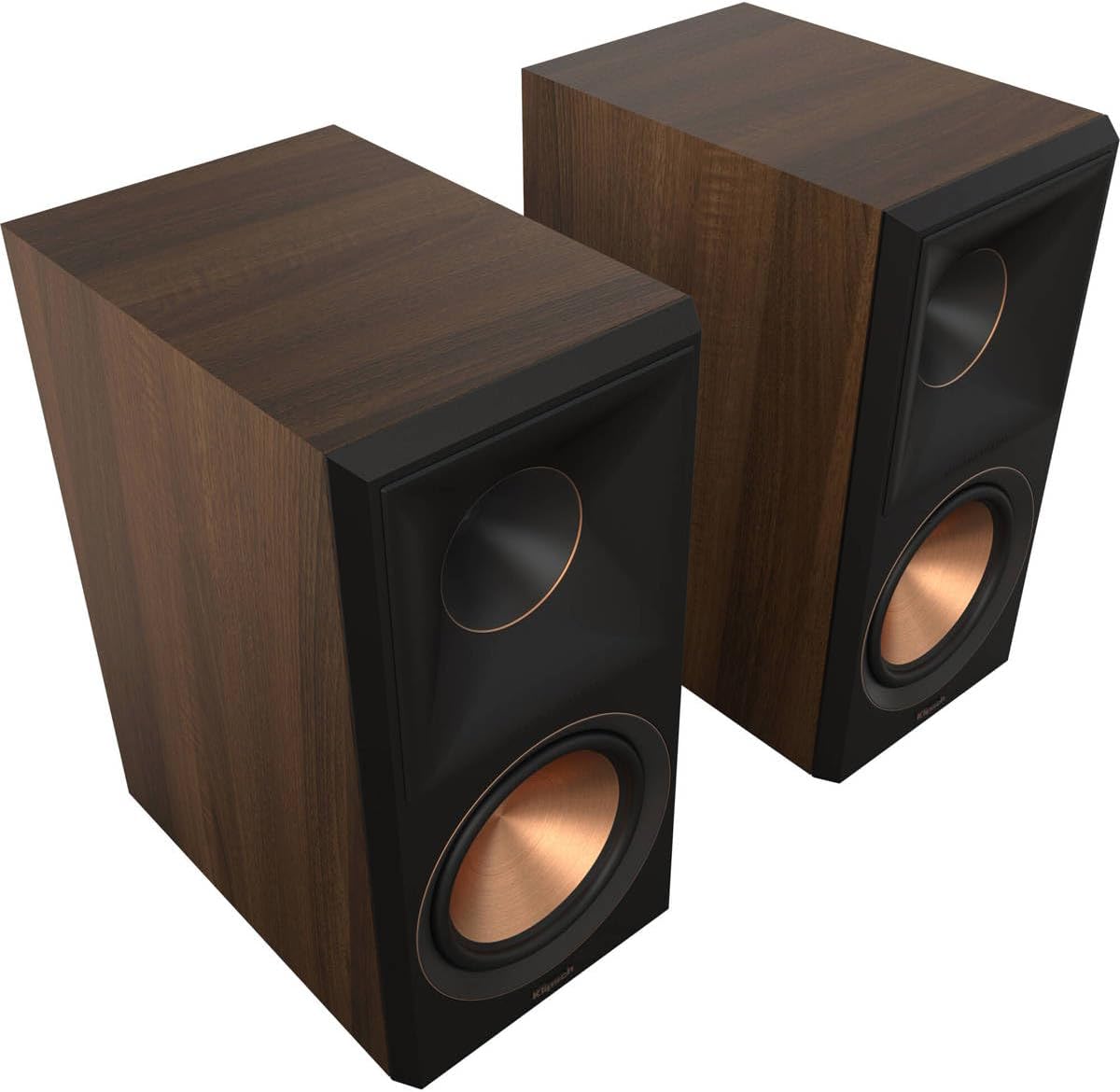
Right out of the box, these feel more expensive than their $650/pair asking price suggests. The cabinets are solid MDF with a satisfying density when you knock on them—none of that hollow, resonant ping you get from budget speakers trying to masquerade as grown-ups. I went with the black wood finish because I’m boring like that, but they also come in walnut and white if you need to match your décor.
The binding posts on the back are proper metal affairs that’ll accept banana plugs, spade connectors, or bare wire without being fussy about it. There’s a rear-firing bass reflex port that’s nicely flared—clearly someone did the math on air turbulence here. The removable grilles attach magnetically, which is the only civilized way to do it in 2024. They look fine aesthetically, but these speakers sound better with the grilles off, so into the closet they went.
The tweeter is a 1-inch soft dome that sits in Wharfedale’s signature shallow waveguide, while the 5-inch woven Kevlar midrange/bass driver gets its own individual chamber inside the cabinet. That slot-loaded design is supposed to minimize internal resonances, and I can tell you it actually works—more on that in a minute.
At roughly 13 inches tall, these are proper bookshelf size. Not those monitor-sized bookshelves that barely qualify. They need stands or actual sturdy shelves, and they need some breathing room behind them—I’d say at least 8-10 inches from the back wall unless you like your bass boomy and undefined.
Sound Quality
Let’s cut to it: these speakers sound way, way better than they have any right to at this price. I’ve spent time with the KEF Q150s, the ELAC Debut B6.2s, and even some older Monitor Audio Bronze models, and the Diamond 12.2s hold their own against all of them while bringing something uniquely British to the table—refinement without being boring.
Bass: The low end doesn’t plumb the absolute depths, but it’s got presence down to maybe 45Hz in my room before it starts rolling off. Put on Massive Attack’s “Angel” and that iconic bassline has proper weight and texture without getting tubby. These aren’t party speakers—don’t expect them to rattle your teeth—but for a 5-inch driver in a relatively compact cabinet, the bass is articulate and musical. The port tuning is spot-on; I never heard any chuffing or boom even when I pushed them harder than I probably should have.
Mids: This is where Wharfedale really earns their paycheck. Vocals are stunning. I mean genuinely, sit-up-and-take-notice good. Spin up Norah Jones’ “Don’t Know Why” and her voice sits right there in front of you with all the breathiness and texture intact. That Kevlar cone does something special in the midrange—there’s a warmth and naturalness that sounds more analog than digital, if that makes sense.
Compare Similar Products


Acoustic guitars have body and resonance. Chris Thile’s mandolin work on Punch Brothers’ “Movement and Location” comes through with all its harmonic complexity. These speakers get timbre right in a way that makes you forget you’re listening to speakers.
Treble: The soft dome tweeter is smooth without being rolled off. It won’t shatter glass or fatigue your ears, but it’s not dull either. Cymbals on John Coltrane’s “Giant Steps” have shimmer and decay. Hi-hats on electronic tracks stay crisp without getting splashy.
If you’re a detail freak who wants every microscopic detail hyper-etched in your face, these might feel slightly polite. But for extended listening sessions—which is how most of us actually enjoy music—that slight warmth in the upper registers is a feature, not a bug. No listener fatigue here, even after three-hour sessions.
Soundstage & Imaging: Here’s where I was genuinely impressed. The soundstage extends well beyond the physical cabinets, and imaging is precise without being weirdly holographic. On Radiohead’s “Everything In Its Right Place,” Thom Yorke’s processed vocals float exactly where they should in the stereo field.
Orchestral pieces like Beethoven’s 7th (Karajan’s recording) have proper depth layering—you can distinguish between the string sections and woodwinds positioned behind them. Not quite at the level of speakers twice the price, but honestly closer than they should be.
The sweet spot isn’t tiny either. You’ve got a reasonable listening window, though they do like being toed in slightly toward the listening position.
Detail & Resolution: There’s real resolution here. You’ll hear the fingers sliding on guitar strings, the breath before a vocal phrase, the room ambiance in live recordings. They’re not ruthlessly analytical—you won’t suddenly hate your entire MP3 collection—but feed them decent source material and they’ll reward you with all the information that’s actually there.
Who It’s For
These are ideal for someone stepping up from entry-level gear or computer speakers who wants legitimate hi-fi sound without selling organs. They’re also perfect for a second system, office setup, or bedroom rig where you want quality but can’t justify megabucks.
If you listen primarily to acoustic music, jazz, vocals, or classic rock, the Diamond 12.2s will make you very happy. EDM and modern hip-hop heads might want something with more bass slam, though these handle electronic music better than you’d expect.
Verdict
At $450/pair, the Wharfedale Diamond 12.2s are an absolute steal. They deliver British hi-fi sensibility—refinement, musicality, proper tonal balance—at a price that undercuts most of the competition while sounding better than speakers costing hundreds more.
Are they perfect? No. The bass won’t shake your foundation, and if you want in-your-face detail retrieval, look elsewhere. But for natural, engaging, easy-to-live-with sound that makes you want to keep listening? These punch so far above their weight class it’s almost unfair to their competitors.
Buy them. Seriously.
Tested with: Cambridge Audio AXA35 integrated amplifier, Topping D10s DAC, Spotify Premium and local FLAC files, 16AWG speaker cable, on Monoprice 24-inch stands
Wharfedale Diamond 12.2 Bookshelf
Click below to check the latest price on Amazon
Check Price on Crutchfield →As an Amazon Associate I earn from qualifying purchases.


