
Three speaker brands. Three completely different engineering philosophies. Three distinct personalities that appeal to three different types of listener. Choosing between Klipsch, KEF, and Focal at the high end of the market isn’t about which is “best” — it’s about which is best for you. Let’s break down the engineering, the sound, and the experience each brand delivers.
The Engineering: How Each Brand Gets Its Sound
Klipsch: Horn Loading and Efficiency
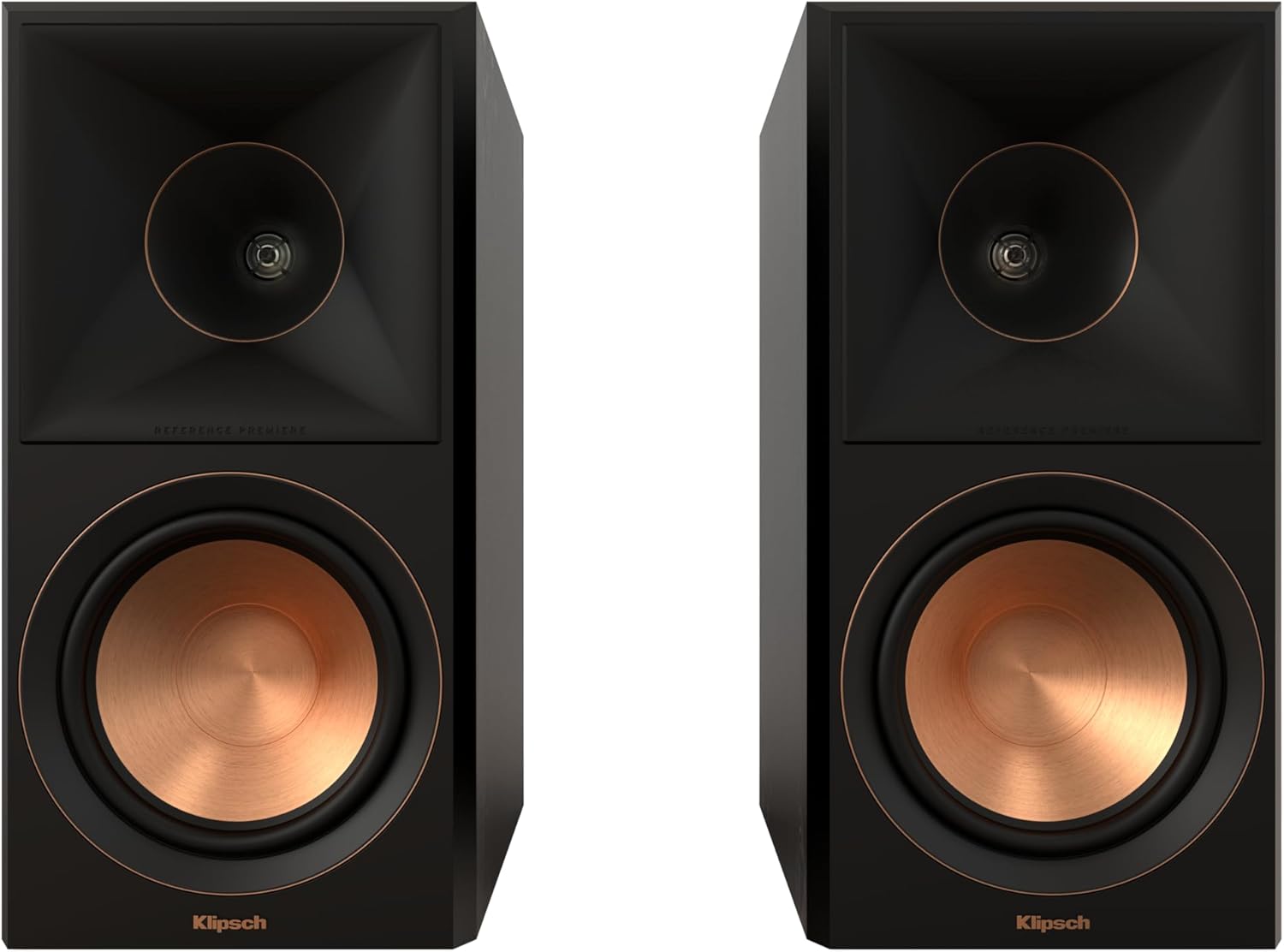
Klipsch’s defining technology is the Tractrix horn; a mathematically precise horn profile that controls how sound radiates from the driver into the room. The horn amplifies the driver’s output, dramatically increasing efficiency (typically 98-105dB sensitivity) and controlling directivity to reduce room reflections. The result: explosive dynamics, immediate impact, and a sense of live-performance scale that conventional speakers struggle to match. The tradeoff: horn colorations (a slight “honk” in the midrange) in less well-designed implementations, and a more forward, exciting presentation that some find fatiguing over long sessions.
KEF: Coaxial Uni-Q Driver Array
KEF’s proprietary Uni-Q driver places the tweeter at the acoustic center of the midrange driver, both drivers share exactly the same point in space. The theoretical (and practical) benefit: perfect time and phase alignment across the crossover region, with sound radiating from a single point like an ideal point source. This produces an extraordinarily wide and even dispersion pattern, a seamless soundstage, and exceptional imaging precision. KEF speakers tend to sound more “correct” and less exciting than Klipsch — they are the reference tool to Klipsch’s rock concert.
Focal: Beryllium and Inverted Dome Tweeters
Focal, the French manufacturer founded in 1979, is best known for its exotic driver materials. The beryllium tweeter used in the Utopia and Sopra lines is the stiffest, lightest tweeter material available – 7x stiffer than titanium at 1/3 the weight. The result is a tweeter that operates far above audibility without distortion, producing an extended, detailed, effortless treble that is genuinely unlike anything else. Focal also uses its patented inverted dome tweeter design, which some find more natural than conventional convex domes.
Product Comparisons at Key Price Points
Under $2,000/pair: The Sweet Spot
- Klipsch RP-8000F II ($1,198/pair) – Best dynamics and efficiency. Floor-stander with dual 8″ woofers. Best for rock, electronic, movies.
- KEF R3 Meta ($2,199/pair – bookshelf) – Best imaging and soundstage. Metamaterial Absorption Technology tweeter. Best for classical, jazz, vocal.
- Focal Aria Evo X No.2 ($1,499/pair – bookshelf) – Balanced performer. Flax sandwich cone midrange, aluminum/magnesium tweeter. Versatile across genres.
$3,000-$6,000/pair: The Sweet Spot for Serious Listeners
- Klipsch Forte IV ($4,998/pair) – Heritage horn-loaded floorstander. Transformative dynamics. Best with tube amps.
- KEF R11 Meta ($4,999/pair) – Reference-class floor-stander. Articulate, wide-band, room-friendly. Best all-rounder at price.
- Focal Kanta No.2 ($6,999/pair) – Beryllium tweeter, Flax midrange. Exceptional detail and dynamics. Stunning industrial design.
$10,000+/pair: Statement Territory
- Klipsch La Scala II ($9,998/pair) – Theater-scale dynamics in the home. 105dB sensitivity. For rooms and listeners who demand scale.
- KEF Blade Two Meta ($15,999/pair) – One of the finest speakers ever made. Single-point-source ideal. Stunning physical design.
- Focal Sopra No.3 ($14,999/pair) – Beryllium + W-cone. French haute couture audiophile. Extraordinarily refined.
Which Brand for Which Music?
Compare Similar Products


KEF R3 Meta Bookshelf Speakers (Pair)
KEF’s reference bookshelf — Uni-Q + MAT technology for unrivaled imaging
Check Price on Amazon →As an Amazon Associate I earn from qualifying purchases.
Klipsch excels with: rock, metal, electronic, hip-hop, movies, anything that benefits from dynamics and scale. Less ideal for: intimate acoustic recordings where horn colorations are audible.
KEF excels with: classical, jazz, acoustic, vocal, anything where imaging and soundstage precision matter most. Also excellent for movies. Less ideal for: listeners who need visceral impact and high SPL above all else.
Focal excels with: almost everything the beryllium tweeter retrieves micro-detail that reveals texture and air in any recording. Particularly stunning for: jazz, classical, well-recorded rock. Less ideal for: poorly recorded material, which Focal reveals with sometimes uncomfortable honesty.
Room Considerations
Room placement matters enormously. Klipsch Horn-loaded speakers are directive — they’re less sensitive to room reflections, which can be an advantage in untreated rooms. KEF Wide Uni-Q dispersion means room treatment and careful placement are more important for optimal imaging. Focal Like KEF, benefits from acoustic treatment and careful positioning.
Bottom Line
If you crave excitement, scale, and dynamics: Klipsch Heritage or Reference Premiere. If you prize accuracy, imaging, and a natural presentation: KEF R or Reference series. If you want the finest possible detail retrieval and don’t mind paying for it: Focal Sopra or Kanta. All three brands make exceptional speakers, the “best” one is the one that makes you forget you’re listening to equipment.

KEF R3 Meta Bookshelf Speakers (Pair)
KEF Uni-Q + Metamaterial Absorption Technology — reference-class imaging
Check Price on Amazon →As an Amazon Associate I earn from qualifying purchases.


