
You know how every audio company claims their gear sounds “natural” or “true to the source”? Yeah, most of that’s marketing BS. But Yamaha? They’ve been preaching their Natural Sound philosophy since the ’70s, and with the A-S501, they’re not just talking—they’re actually delivering something that gets out of its own way and lets the music breathe.
I’ve had this silver beast on my desk for three months now, and honestly, it’s made some of my pricier gear look embarrassingly colored by comparison.
Unboxing & Build
The A-S501 comes packed like Yamaha actually cares if it arrives intact-thick cardboard, foam end caps, the works. First impression when you lift it out? This thing has weight. At 22 pounds, it’s not going to slide around your rack, and that substantial heft comes from a proper toroidal transformer and decent internal shielding.
The chassis is solid steel with a brushed aluminum front panel that looks way more expensive than the price tag suggests. Mine’s the silver finish, and it’s got this understated elegance that’ll blend into any setup without screaming for attention. The black version looks equally classy if that’s more your vibe.
Build quality is proper Japanese manufacturing-no flex in the panels, tight tolerances, and controls that feel precise without being stiff. The volume knob has this perfectly weighted resistance that makes fine adjustments actually possible. My only nitpick? The feet are basic rubber—I swapped them for IsoAcoustics pucks and noticed a slight improvement in low-end clarity, but that’s tweaker territory.
Features & Controls
The front panel keeps it simple: power button, input selector, tone defeat switch, bass/treble controls, balance, and that gorgeous volume knob. Around back, you’ve got four RCA inputs, a phono input (MM only), pre-out for adding a subwoofer, and speaker terminals A and B.
The phono stage is actually useable, which is rare at this price. I ran my Audio-Technica AT-VM95ML through it spinning Blue Train, and while it’s not going to replace a dedicated $500 phono pre, it’s completely adequate for entry-level vinyl enthusiasts. A bit noisy if you really crank it, but with typical listening levels, it’s clean enough.
Here’s what I love: the tone defeat button. When engaged, it completely bypasses the tone circuit for the purest signal path. I keep it engaged 99% of the time, but having bass/treble adjustment available for poorly recorded material or room correction is genuinely useful.
What’s missing? No DAC, no streaming, no digital inputs at all. This is pure analog integration, which means you’ll need an external DAC for digital sources. Not a dealbreaker for me—I’d rather Yamaha focus on doing amplification right than half-ass a bunch of features.
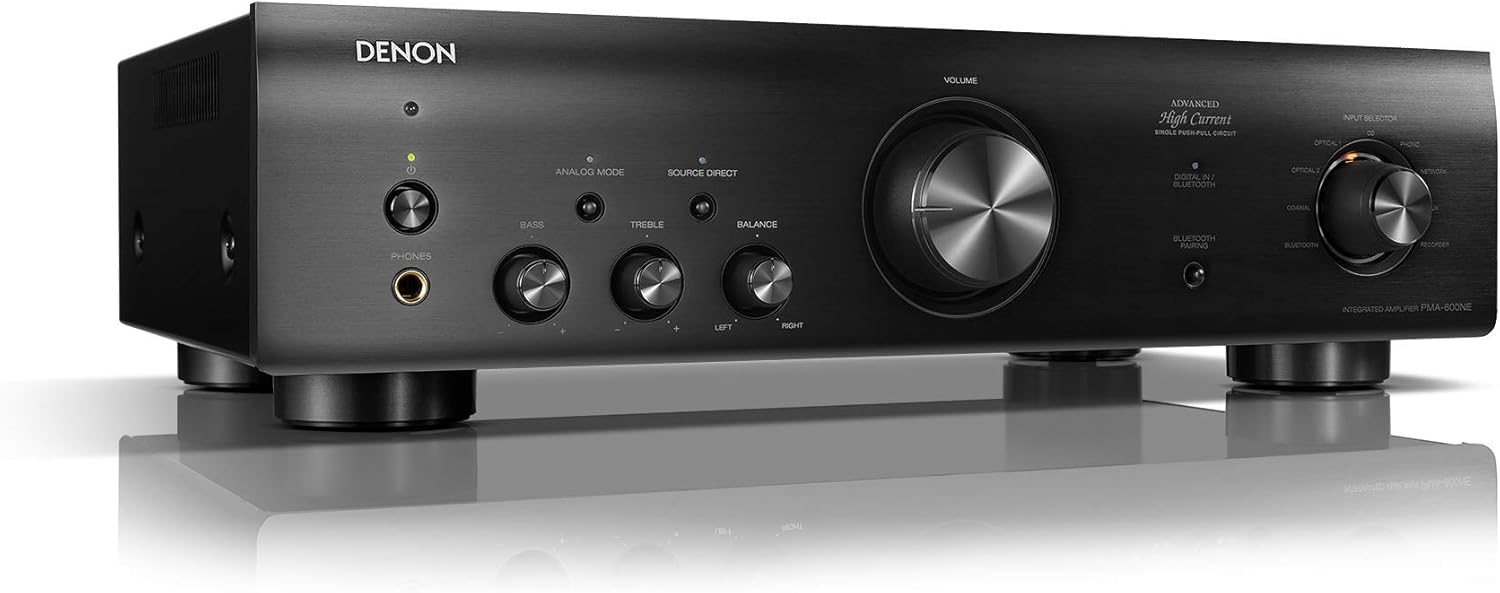
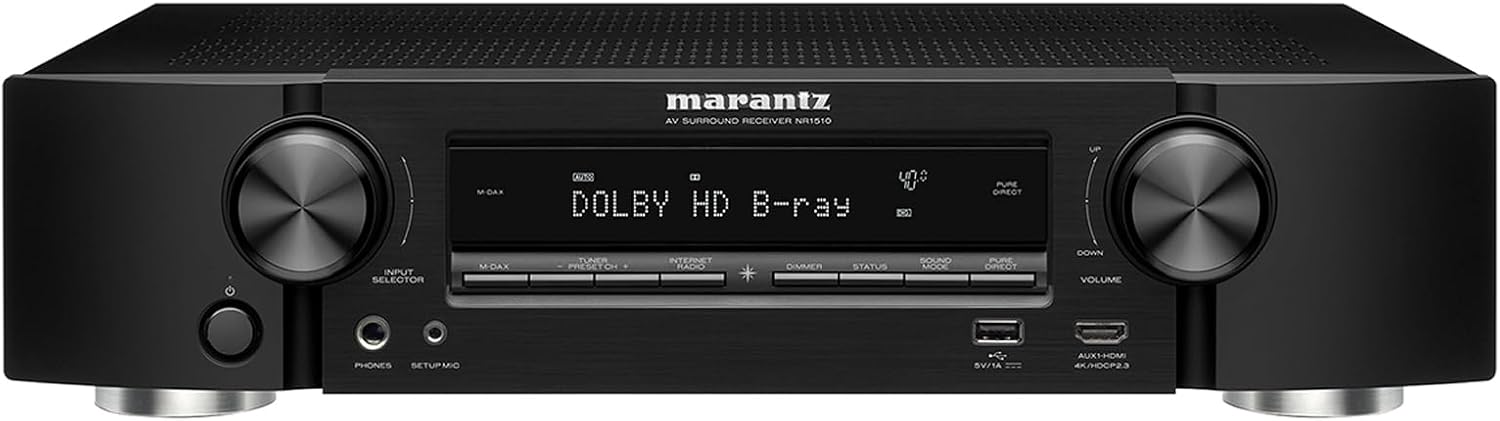
Compare Similar Products

Sound Quality
Right, the important bit. The A-S501 claims 85 watts per channel into 8 ohms, and in typical Yamaha fashion, that’s probably conservative. I’ve been driving both my KEF Q350s and some hungrier Wharfedale Diamond 12.3s without breaking a sweat.
Bass: The low end is controlled and articulate without being lean. Spinning Massive Attack’s “Angel” from Mezzanine, that deep sub-bass rumble has proper weight and texture—you can hear the layers in that synth bass instead of just feeling a generic thump. It doesn’t have the absolute slam of my buddy’s Marantz PM8006, but it’s tighter and faster. Stanley Clarke’s bass lines on School Days have snap and definition that cheaper amps smear into mush.
Mids: This is where Yamaha’s natural sound philosophy really shines. Vocals sit exactly where they should—neither pushed forward nor recessed. Norah Jones on “Don’t Know Why” sounds intimate without being in-your-face, and the piano has realistic body. Switching to Radiohead’s “Reckoner,” Thom Yorke’s layered vocals maintain their individual space instead of collapsing into a blob. There’s zero coloration here, no warmth added, no brightness boost, just what’s in the recording.
Treble: Extended and detailed without a hint of harshness. Cymbals on Bill Evans’ “Waltz for Debby” have that proper metallic shimmer with all the decay intact. I can listen to bright recordings like early Dire Knits CDs without wincing, which tells me the top end is honest rather than hyped. It’s not quite as airy as some Class A designs, but it’s more refined than you’d expect at this price point.
Soundstage & Imaging: Here’s where things get interesting. The A-S501 throws a wide, natural soundstage that doesn’t artificially inflate beyond your speakers. With a good recording like Steely Dan’s “Aja,” instruments occupy specific locations with precise boundaries. Donald Fagen’s vocal is dead center, the horns are clearly positioned left and right, and there’s genuine depth to the mix.
Imaging is impressive—not holographic like my friend’s tube amp, but solid and stable. On St. Vincent’s self-titled album, her guitar effects swirl around the stereo field with clear trajectory. You won’t get pin-point imaging with poorly recorded pop, but give it a quality source and speakers, and it’ll show you everything that’s there.
Detail: This amp resolves micro-details without being analytical. The finger squeaks on acoustic guitar, the room ambience in live recordings, the breath between vocal phrases—it’s all present but never highlighted to the point of distraction.
Who It’s For
The A-S501 is perfect for the listener who wants high-quality amplification without the audiophile tax. If you’ve got efficient speakers (anything above 86dB sensitivity), a decent source, and you just want the electronics to disappear, this delivers.
It’s also ideal if you’re building a simple two-channel system and don’t need streaming features. Pair it with a good streamer/DAC and speakers, and you’ve got an endgame-quality setup for reasonable money.
Who should skip it? If you need serious power for inefficient speakers in a large room, look at the A-S701 or A-S801. And if you want built-in digital connectivity, this ain’t it.
Verdict
At around $550 (street price—MSRP is higher), the Yamaha A-S501 is borderline stupid value. It competes with amps costing twice as much in terms of sound quality, and the build is better than most competitors at this price. The natural, uncolored sound won’t wow you on a 10-minute demo, but live with it for a month and you’ll realize how fatiguing colored sound can be.
Is it perfect? No. It could use another 20 watts for difficult loads, and audiophile snobs will complain about the spec sheet. But for real-world music listening? This thing nails it. Yamaha set out to build an honest amplifier that serves the music, and that’s exactly what they’ve delivered.
Tested with: KEF Q350 speakers, Wharfedale Diamond 12.3 speakers, Cambridge Audio CXN streamer/DAC, Audio-Technica AT-VM95ML cartridge on Pro-Ject Debut Carbon turntable, Chord Mojo DAC
Yamaha A-S501 Integrated Amplifier
Click below to check the latest price on Amazon
Check Price on Amazon →As an Amazon Associate I earn from qualifying purchases.


