
You know that moment in a concert when you can pinpoint exactly where each instrument is on stage, like you’ve got X-ray vision for sound? That’s what KEF’s Uni-Q driver technology does in your living room, and the Q1s make it accessible without requiring you to sell a kidney. These compact bookshelf speakers punch way above their weight class, and after three months with them, I’m still discovering details in tracks I’ve heard a thousand times.
Unboxing & Build
The Q1s arrive in typical KEF fashion—no-nonsense packaging that prioritizes protection over Instagram-worthy unboxing theatrics. Inside, you get two surprisingly dense speakers that immediately feel more premium than their price suggests. At 13 pounds for the pair, these aren’t the flimsy boxes you’ll find at big box stores.
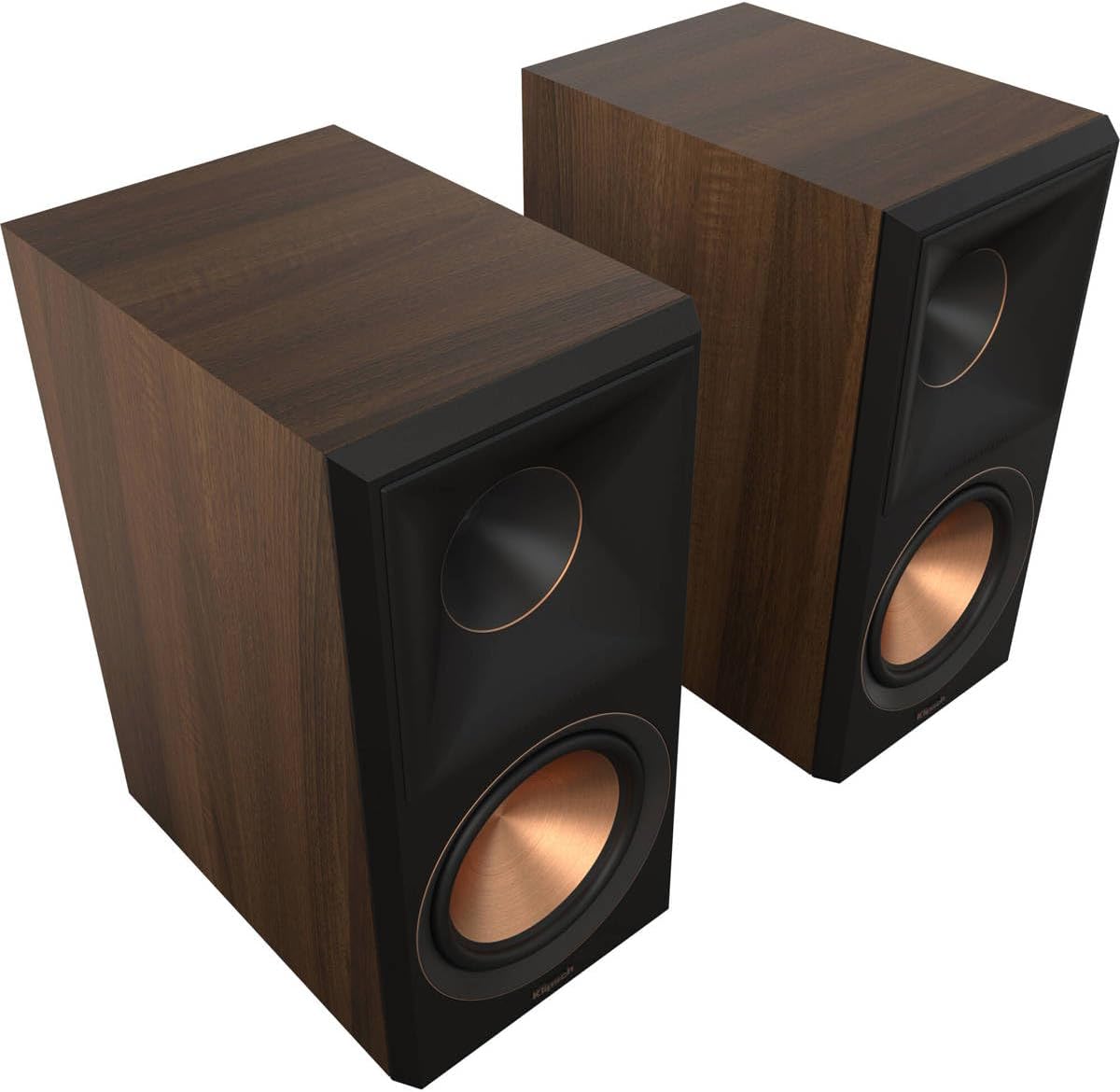
The cabinet construction is solid MDF with that signature KEF curved baffle design. I’ve got the matte black finish, which looks understated and professional, though they also come in white if that’s your thing. The vinyl wrap is convincing enough that guests assume they’re real wood until they get close. Build quality is tight—no rattles, no panel resonance when you knock on them, no flex in the binding posts.
Those binding posts, by the way, are proper five-way posts that accept banana plugs, spades, or bare wire. They’re recessed into the back panel, which makes cable management cleaner but can be slightly annoying if you’ve got thick hands. The grilles attach magnetically and actually look decent, though like most speakers, they sound better naked.
The Uni-Q driver dominates the front baffle—that’s KEF’s concentric design where the 1-inch aluminum tweeter sits dead center in the 5.25-inch midrange driver. It looks sci-fi, performs like magic.
Sound Quality
Here’s where things get interesting. Fire up Steely Dan’s “Aja,” and the Q1s immediately demonstrate what the Uni-Q driver fuss is about. Donald Fagen’s vocals, Wayne Shorter’s saxophone, and that complex percussion section each occupy their own distinct space. The imaging is almost holographic—close your eyes and you can point to where each instrument sits in the mix. I’ve heard speakers three times the price that don’t image this precisely.
The soundstage width is impressive for 12-inch boxes. On Radiohead’s “Weird Fishes/Arpeggi,” those layered guitars stretch well beyond the physical speaker cabinets. The depth is good too, though not quite as exceptional as the width. Where the Q150s truly shine is vertical dispersion—you can stand up, sit down, even lay on the floor (don’t judge my listening habits), and the tonal balance stays remarkably consistent. That’s the Uni-Q advantage.
Bass response is the reality check. These are small speakers with 5.25-inch drivers—physics still applies. They’re rated down to 51Hz, and yeah, that’s about right. Massive Attack’s “Angel” has decent weight and punch, but you’re not getting that sub-bass rumble that makes your chest vibrate. The bass that’s there is tight and controlled though. On Vulfpeck’s “Dean Town,” Joe Dart’s bassline has great articulation and rhythm, even if it doesn’t have the full body you’d get from larger woofers or a subwoofer.
For electronic music and hip-hop, you’ll want a sub. For jazz, rock, and acoustic music, they hold their own surprisingly well.
Compare Similar Products


Midrange is where these speakers live their best life. The Uni-Q design means vocals come from the exact same point in space as everything else, creating this coherent presentation that just sounds right. Norah Jones on “Don’t Know Why” has that intimate, late-night club feeling. Chris Cornell’s powerful vocals on Soundgarden’s “Black Hole Sun” have all the texture and emotion intact.
Acoustic guitar strings on José González’s “Crosses” have realistic resonance and decay. There’s no boxiness, no weird coloration—just clean, detailed mids.
Treble from that aluminum dome tweeter is crisp and extended without being harsh. The high-hat work on John Coltrane’s “Giant Steps” has shimmer and air. Cymbals sound like metal, not like someone crinkling cellophane (looking at you, cheap tweeters).
Can they get bright? Yeah, if your room is super reflective or you’re feeding them harsh recordings. I found toeing them in slightly helped tame any edge on poorly mastered tracks. Also, these speakers need proper amplification—don’t run them from a cheap receiver and wonder why they sound thin.
Detail retrieval is genuinely excellent. The Q150s are revealing enough that you’ll hear the difference between Spotify and lossless files. On “Hotel California” (yeah, I went there), you can hear Don Henley’s breath before vocal phrases, the finger slides on the guitars, and the subtle reverb tails. But they’re not so ruthlessly analytical that they make everything sound sterile.
Who It’s For
The Q150s are perfect for the apartment dweller who wants serious sound without annoying neighbors or dominating the room. They’re ideal for desktop nearfield setups—that point-source imaging works beautifully at 2-3 feet. They’re great for someone upgrading from soundbars or Bluetooth speakers who’s ready to experience actual stereo imaging.
You’ll need: a decent amplifier or receiver (I’d say 50+ watts), proper stands to get the tweeters at ear level, and some time to experiment with placement. These reward effort.
You don’t want these if: you live for deep bass and refuse to add a subwoofer, you have a huge room to fill, or you exclusively listen to bass-heavy electronic music at high volumes.
Verdict
At their regular $600/pair price, the Q150s are solid. At the $300-400/pair they frequently go on sale for? They’re absolutely stupid good value. That Uni-Q driver technology trickles down from KEF’s reference series, and you’re getting legitimately high-end imaging performance in an affordable package.
Are they perfect? No. They need stands, they want a capable amp, and bass-heads will want a sub. But for everything they do well—and they do a lot well—these little speakers deliver a listening experience that competes with gear costing significantly more.
If you see them on sale, grab them. You’ll be grinning like an idiot the first time you hear that imaging.
Price: $599/pair (regularly on sale for $300-400)
Worth it? Absolutely, especially on sale. Even at full price, they’re competitive.
Tested with: Yamaha A-S501 integrated amplifier, Cambridge Audio AXR85 receiver, 12-gauge speaker cable, 24″ Sanus stands, WAV/FLAC files via AudioEngine D1 DAC and Spotify Premium
KEF Q1 Bookshelf Speakers
Click below to check the latest price on Amazon
Check Price on Amazon →As an Amazon Associate I earn from qualifying purchases.


